Russell Brandom's framing of xAI as a "neocloud" is worth taking seriously — not because it's a clean label, but because it describes something structurally distinct from the other major AI labs. Understanding what xAI is actually building matters for anyone competing in or building with AI infrastructure.
What a neocloud means structurally
Traditional cloud providers (AWS, Azure, GCP) built infrastructure as the primary product: they sold compute, storage, and networking to customers who built their own software. The differentiation was operational scale, reliability, and ecosystem.
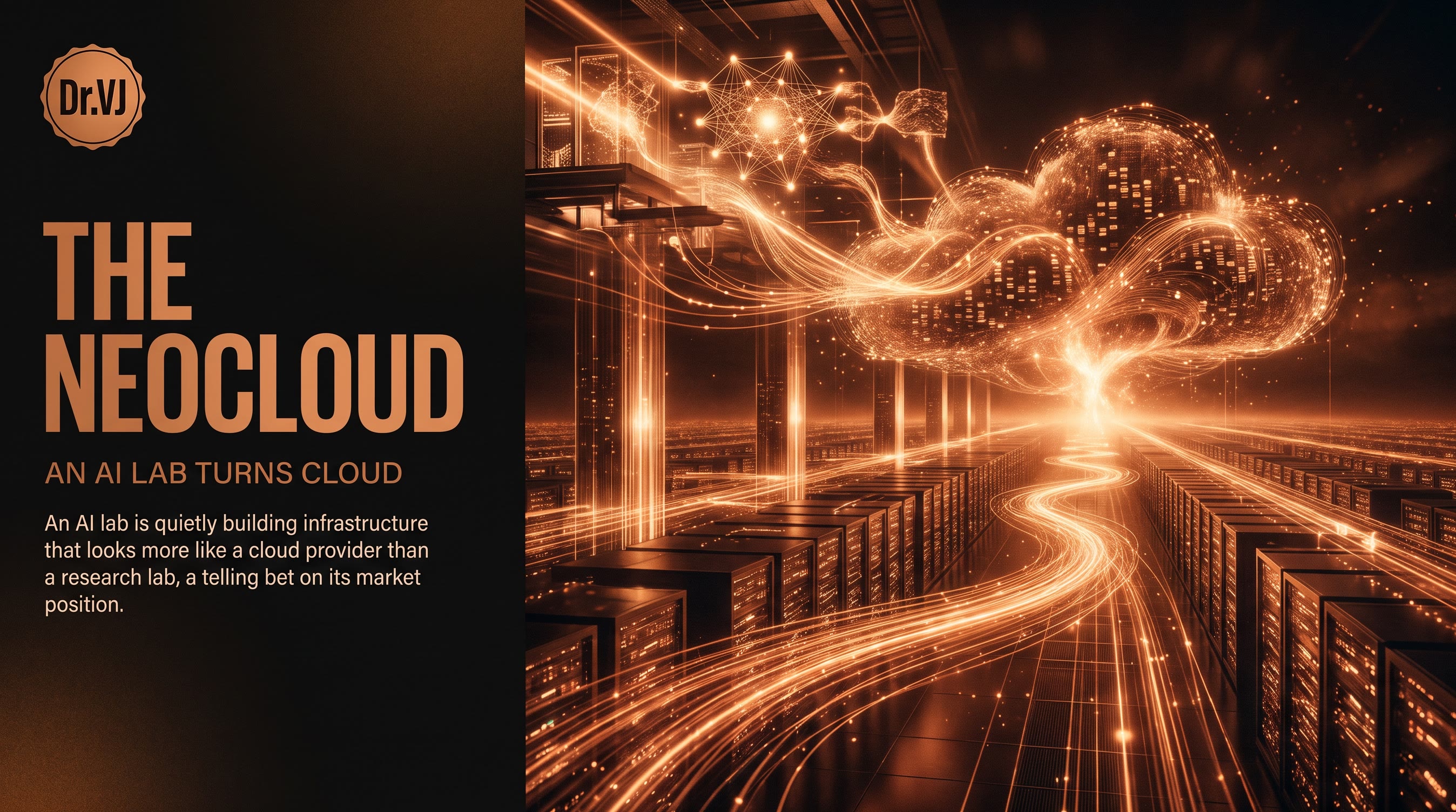
The neocloud framing suggests xAI is building the same way — infrastructure as the primary value layer — but with AI as the anchor workload. Instead of competing on general-purpose compute, they compete on AI-optimized compute and APIs, bundled with model access, data services, and eventually application platforms.
This is different from OpenAI (API-first, no owned infrastructure), Anthropic (API-first with strategic infrastructure partners), and Google (deep infrastructure but fragmented AI products). xAI's position is more coherent: own the model, own the infrastructure, sell the full stack.
The Grok model as the anchor
xAI's competitive position rests on Grok — a model positioned differently from GPT or Claude. The key differentiators:
Personality and voice — Grok is designed to have a distinct voice. It's witty, direct, and politically irreverent. This isn't just a gimmick — it serves a real market position for applications that want AI with character rather than generic helpfulness.
Real-time information — Grok's access to live X/Twitter data is a genuine differentiation point. For use cases where current information matters (financial analysis, news monitoring, market intelligence), Grok has structural advantages that others can't easily replicate.
The "with Musk" moat — Whether this is an asset or liability depends on your market, but for certain segments (tech-forward users, startup ecosystem, crypto-adjacent applications), xAI's association with Musk and the broader Musk industrial complex (Tesla, SpaceX, X) creates a brand halo that's difficult to manufacture.
The infrastructure dimension
The neocloud thesis gets interesting when you layer in the infrastructure:
SpaceX Terafab — The reported $119B Texas chip factory isn't just about xAI, but it signals the kind of vertical integration that xAI is willing to pursue. If successful, this would give xAI something no other AI lab has: a path to custom silicon outside of TSMC-dependent supply chains.
Colossus data center — xAI's reported massive data center buildout positions them to run inference at a scale and cost structure that API-dependent labs can't match. Owning the compute means controlling the price.
The API-as-product strategy — Grok's API has been expanding rapidly. The model-as-product approach is standard, but combined with owned infrastructure, it creates a margin structure that subsidized API access (a la OpenAI's current economics) doesn't support.
What this means for builders
For teams building on AI APIs, the neocloud framing has practical implications:
Grok is a legitimate alternative — It's not just a GPT clone. For specific use cases (real-time analysis, personality-driven applications, X-integrated workflows), Grok has structural advantages that make it worth evaluating seriously.
Infrastructure reliability matters — xAI's vertical integration creates different risk profiles than API-dependent labs. If xAI controls its own compute, it has more resilience to third-party infrastructure disruptions.
Watch the pricing dynamics — A vertically integrated neocloud can sustain different pricing than a lab that buys compute from cloud providers. This could create price pressure across the market, benefiting builders.
The neocloud framing is speculative, but it describes something real: xAI is building a more vertically integrated AI stack than its competitors, and the implications for the AI API market are worth monitoring closely.