CopilotKit raised $27 million in Series A funding with a specific pitch: the problem isn't building AI agents — it's deploying them inside applications where users actually work.
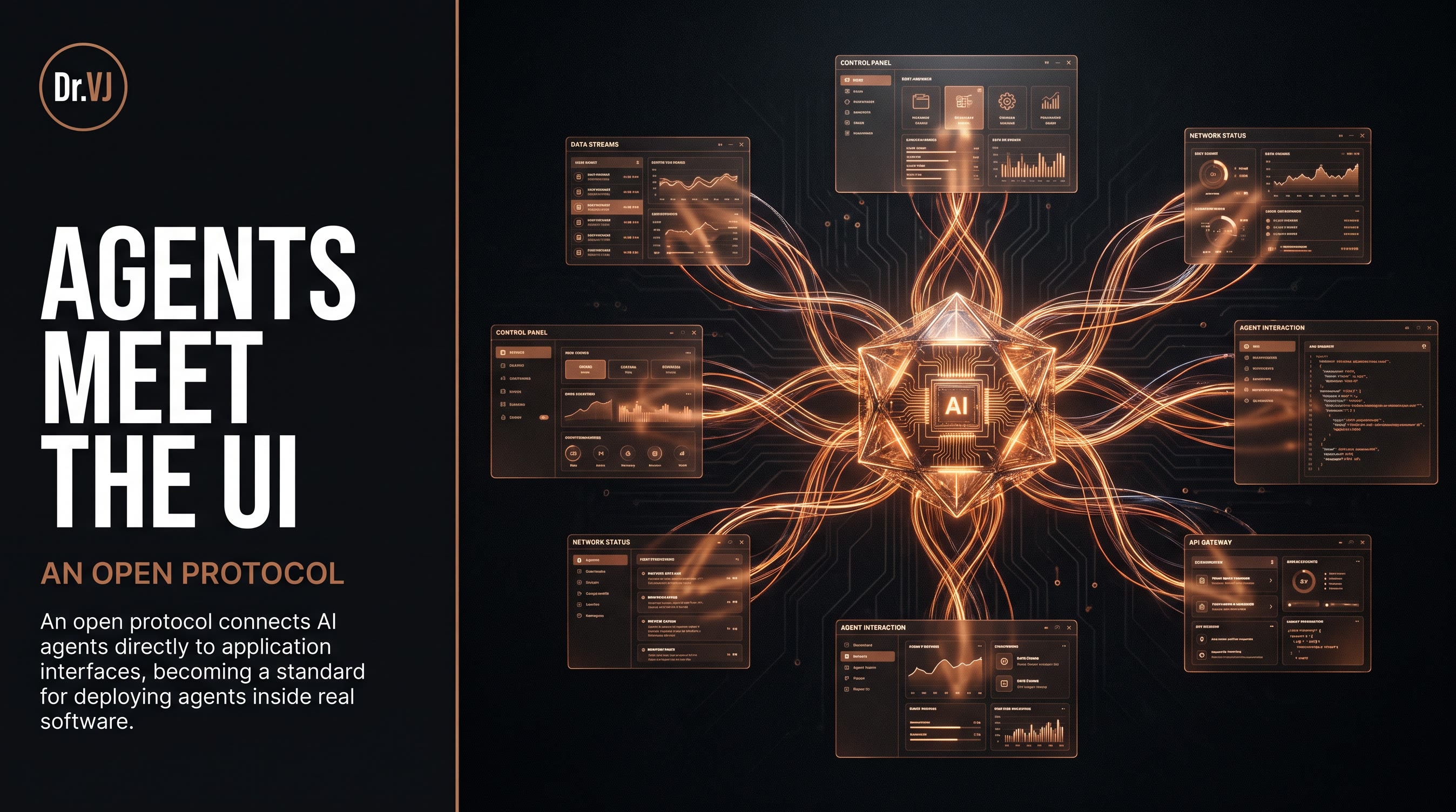
The company builds the AG-UI protocol: an open-source framework that standardizes how AI agents connect to and communicate with user interfaces. The protocol handles streaming chat, front-end tool calls, and state sharing for human-in-the-loop functionality. The result: agents that "live inside applications, understand what users are doing, take actions, and show useful interfaces instead of just returning long blocks of text."
The funding — led by Glilot Capital, NFX, and SignalFire — brings CopilotKit to approximately $380M+ valuation. With about 25 employees. Millions of installs per week. Fortune 500 customers. Supported by the entire enterprise software stack.
Why App-Native AI Is Different From Chatbot AI
The chatbot paradigm: you send text, you receive text. The AI is a separate interface — a window you interact with, then return to your actual work.
The app-native paradigm: the AI lives inside your application, understands what you're doing, takes actions within the context of your workflow, and returns results that fit your application's interface.
CEO Atai Barkai described it: "The agent can reply to you, not just with blocks of text, but with interactive UIs that are defined by your own company."
This is a meaningful difference. A chatbot for a CRM tells you what to do. An agent inside a CRM takes the action, shows you the result in the CRM's own interface, and moves on. The AI becomes infrastructure rather than a separate tool.
The AG-UI Protocol as Infrastructure
AG-UI is an open-source protocol. This is deliberate — adoption requires standardization, and standardization requires openness. If every AI agent vendor built their own UI integration, enterprise customers would face the same integration chaos that surrounded early cloud adoption.
The protocol works alongside Anthropic's Model Context Protocol (MCP) and Google's Agent2Agent (A2A). MCP handles model-context integration. A2A handles agent-to-agent communication. AG-UI handles agent-to-UI integration. These three protocols together cover the full agent deployment stack.
Support from Google, Microsoft, Amazon, Oracle, LangChain, and Mastra means the protocol has cross-vendor backing. This is a critical mass for adoption — enterprise buyers can standardize on AG-UI without worrying about vendor lock-in.
The Enterprise Customer Footprint
Deutsche Telekom. DocuSign. Cisco. S&P Global. Millions of installs per week.
These are not pilot customers. Deutsche Telekom and Cisco are massive enterprise deployments with complex integration requirements. S&P Global operates in financial data — a domain where AI accuracy and reliability matter enormously. DocuSign processes legally binding agreements. Getting production deployments in these environments means CopilotKit has solved real integration problems.
The key differentiator: CopilotKit isn't just a framework for developers — it's a framework that has already been embedded in production enterprise applications at scale.
What This Means for AI Builders
The CopilotKit story has clear lessons:
The AI agent deployment problem is real and undersupplied: Building agents is one challenge. Deploying them inside applications where users work is a different problem — one that requires UI integration, state management, and human-in-the-loop capabilities that general AI frameworks don't provide out of the box.
Open-source protocols win in infrastructure: AG-UI as an open protocol means the value isn't in the protocol itself — it's in the tooling, enterprise support, and integration ecosystem built around it. This follows the Kubernetes and Terraform pattern: the protocol creates the market, the ecosystem captures the value.
Agent-to-UI is becoming a distinct category: MCP for model context, A2A for agent communication, AG-UI for agent-to-interface. These three categories map to a full AI agent deployment stack. The companies that own each layer are building the infrastructure of the AI era.
Human-in-the-loop is non-negotiable in enterprise: Streaming chat, tool calls, state sharing — these aren't nice-to-haves. They're the mechanisms that let human operators stay in control of AI agents operating in production environments. Any agent framework that skips human-in-the-loop capabilities will struggle in enterprise deployments.
CopilotKit at $27M with Fortune 500 customers and millions of weekly installs validates that app-native AI agents are a real market — and that the infrastructure layer for deploying them is worth building.