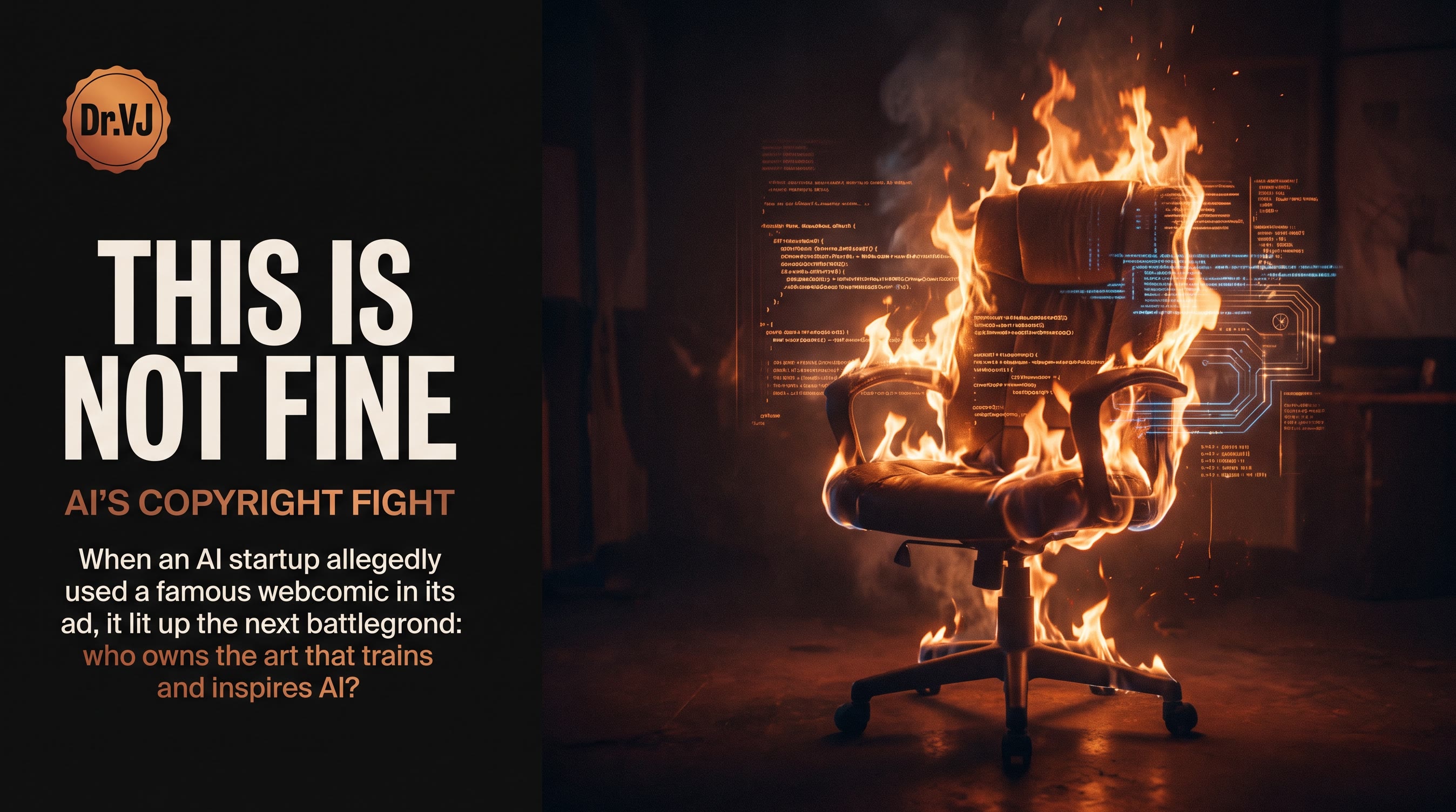
In May 2026, KC Green — who created the "This is fine" webcomic in 2013 — discovered his work on a subway advertisement for an AI startup called Artisan. The ad featured his cartoon dog sitting in flames, now captioned "my pipeline is on fire," promoting "Hire Ava the AI BDR." Green called the startup's appropriators "no-thought A.I. losers" and told followers to "vandalize it if and when you see it."
Artisan's initial response: "We have a lot of respect for KC Green and his work, and we're reaching out to him directly." Green is now looking into legal representation.
This is the AI copyright debate moving from theory to practice. Let me explain why this matters for anyone building AI products that involve creative work.
The Anatomy of the Dispute
The "This is fine" meme is one of the most recognizable web comics in internet history. Green created it in 2013. It's been shared millions of times, appeared in thousands of social media posts, and has become a cultural shorthand for systemic dysfunction.
Artisan is an AI company (specifically an "AI BDR" — Business Development Representative). They appear to have used the image — either trained on it or directly referenced it — as promotional material without permission.
The pattern is becoming familiar: AI company creates value from creative work → original creator gets no compensation → discovers usage after the fact → AI company expresses "respect" and promises to "reach out."
Why This Case Is Different From Prior AI Copyright Disputes
Most AI copyright cases so far have been about training data — lawsuits about whether AI models were trained on copyrighted material without permission. Those are important cases, but they're abstract: the training happened at scale, across millions of works, and the harm to any individual creator is diffuse.
The "This is fine" case is different because the infringement is concrete, visible, and commercial:
It's not training data — it's output: Artisan didn't just train on Green's work. They appear to have used a direct reproduction or near-reproduction in a commercial advertisement. This is closer to traditional trademark or copyright infringement than model training disputes.
The usage is commercial: A subway advertisement is advertising a product. The "This is fine" imagery was used to sell something. This is the clearest possible case of commercial exploitation of someone else's creative work.
The creator is identifiable and reachable: Unlike training data disputes involving millions of anonymous creators, KC Green is a named, reachable person whose specific work was used. The "we're reaching out to him directly" defense doesn't work when the creator is right there.
The "We Have Respect" Defense
Artisan's response pattern — "we respect the creator, we're reaching out" — is the standard AI company playbook for copyright incidents. It sounds reasonable. It isn't.
The problem with the "respect and reach out" response is that it treats the dispute as a communication problem rather than a legal problem. The implication is that if they'd just contacted Green first, everything would be fine. But that's not how copyright works: using someone's creative work commercially without permission isn't a courtesy issue — it's a rights issue.
Green's response cuts through this: "These no-thought A.I. losers aren't untouchable." He's not interested in a courtesy conversation. He's interested in enforcement.
What This Means for AI Builders
If you're building AI products that involve creative work — images, text, music, design — the "This is fine" case has specific lessons:
Assume everything is someone's copyright until proven otherwise: The "fair use" defense is real but narrow. Training on data is one thing; outputting something that looks like a specific creator's work is another. Commercial usage of identifiable creative work is the highest-risk category.
Get explicit permission before using specific creative works in output: If your AI product could produce outputs that reference specific artists, brands, or creative works, you need a licensing strategy. "We trained on public data" is not a defense for commercial exploitation of specific works.
The "reach out and apologize" model is a liability, not a solution: Discovering infringement after the fact and then expressing respect doesn't undo the harm. It also doesn't create a paper trail that protects you legally. Proactive licensing is cheaper than retroactive legal defense.
Copyright infringement in AI is becoming real enforcement, not just academic debate: The cases that seemed hypothetical six months ago are happening now. KC Green is looking for legal representation. Courts are beginning to establish precedent. The risk landscape for AI copyright is hardening.
The "This is fine" dog is literally on fire in a subway ad for an AI company. That image is now the most concrete illustration of why AI copyright enforcement is accelerating — and why AI builders need to take intellectual property rights seriously before their next subway ad goes up.