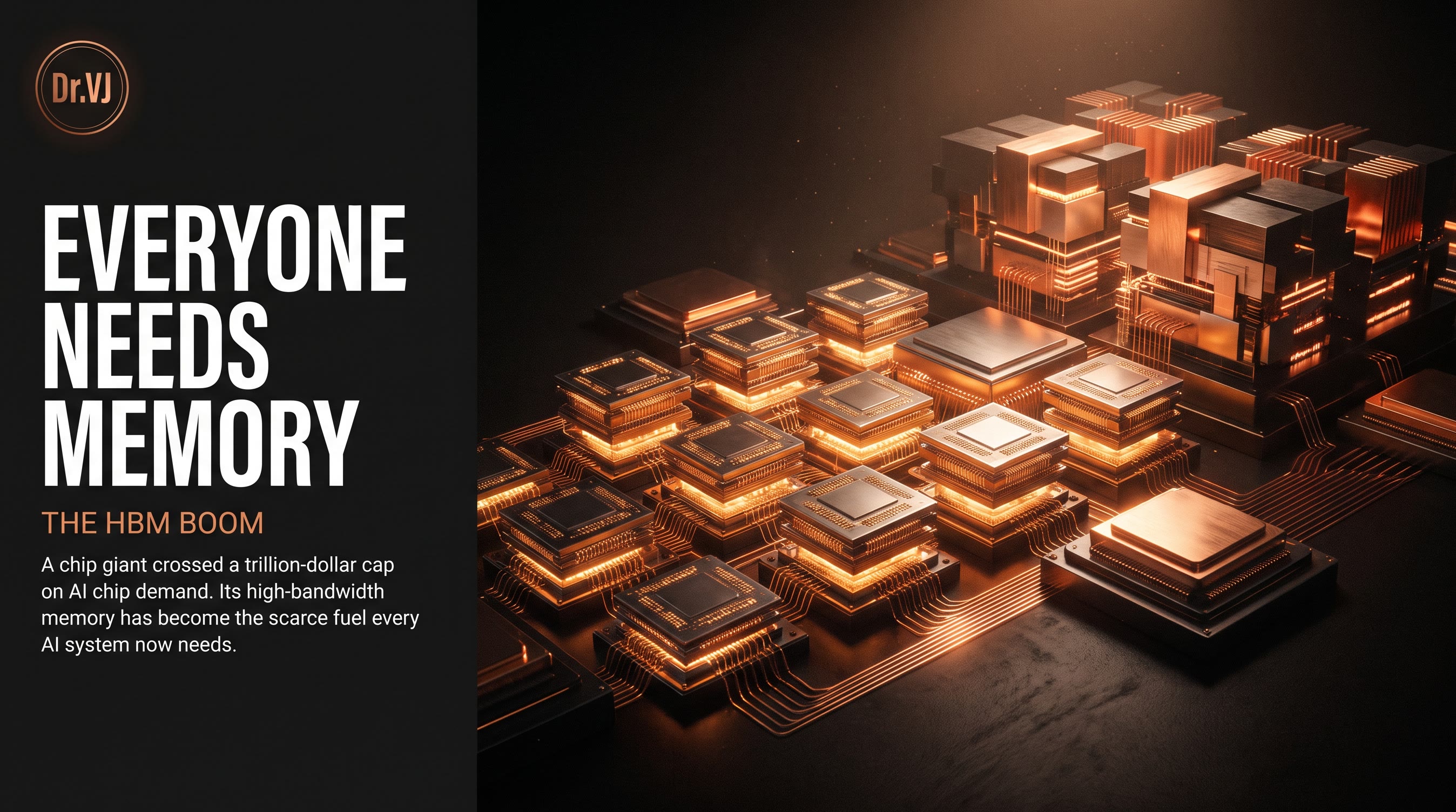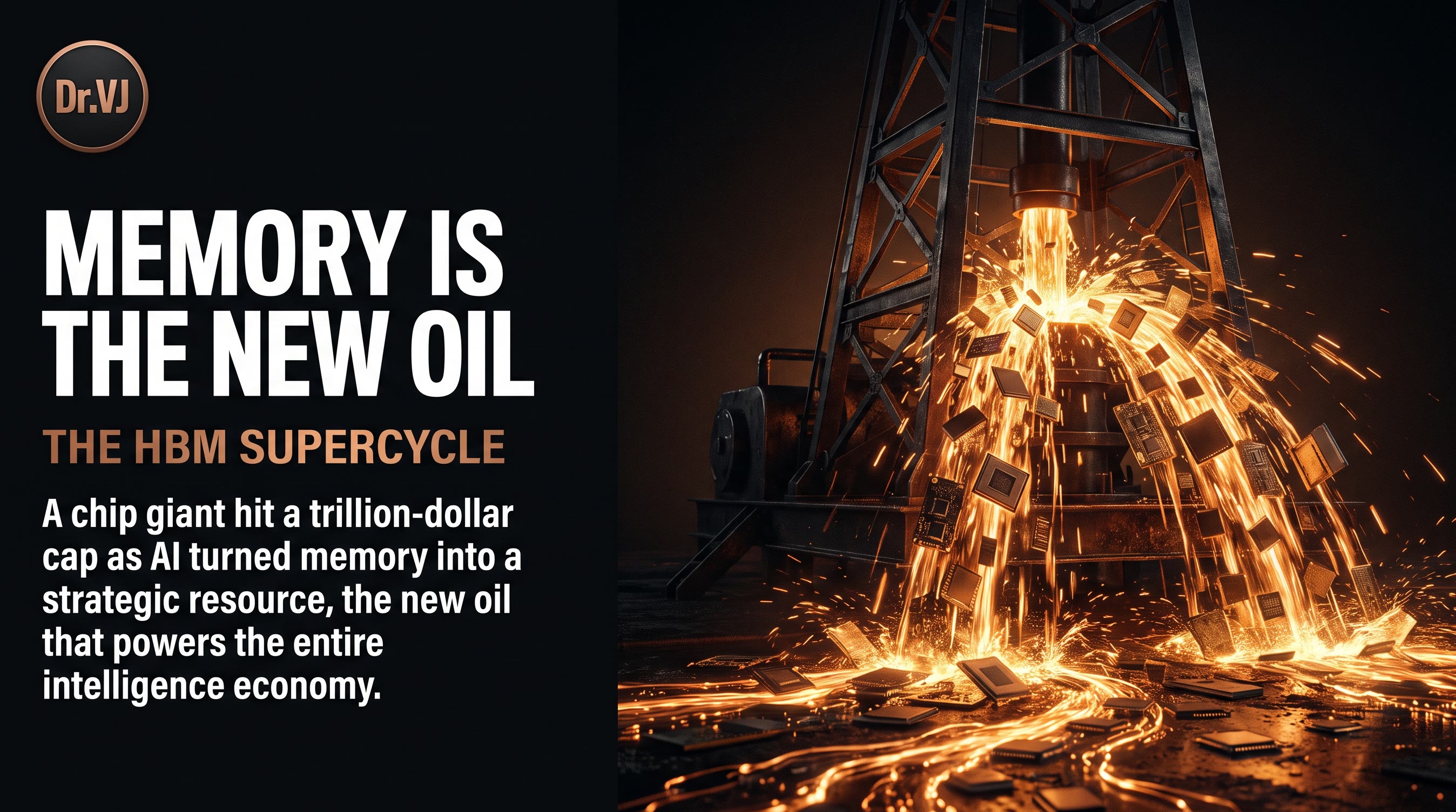
Samsung crossed the $1 trillion valuation mark on May 6, 2026, with shares surging over 10% in a single session. The proximate cause: AI data centers are buying memory chips at a rate that makes previous demand look quaint. Samsung's high-bandwidth memory (HBM) chips — the kind that go into NVIDIA GPUs and AI accelerator systems — drove profits eight times higher than the same period last year. But the milestone is a symptom of something larger: the AI boom isn't just changing software. It's permanently rewriting the semiconductor supply chain.
The memory business gets a second wind
For years, the memory chip market was cyclical, brutal, and strategically unglamorous. DRAM and NAND flash were commodities. Price wars were endemic. Samsung, SK Hynix, and Micron competed on manufacturing efficiency, not on the sophistication of their products. The notion that memory chips would become the most contested strategic resource in technology would have seemed absurd five years ago.
Then came AI. The transformer architecture that powers modern language models is extraordinarily memory-hungry. Running inference on a frontier model requires loading billions of parameters into memory, repeatedly, for every token generated. HBM — high-bandwidth memory — solves the bandwidth problem that regular DRAM can't handle at AI workloads. It's not just about storage capacity; it's about moving data to the compute units fast enough to keep GPUs busy.
This creates a structural demand shift. Traditional data center workloads were compute-bound or storage-bound. AI workloads are memory-bandwidth-bound. Samsung and SK Hynix spent years developing HBM for the graphics market. The AI boom turned their R&D investments into the most valuable chips in the industry.
Apple's strategic pivot
The more significant signal from this period is reports that Apple is exploring partnerships with Samsung and Intel for U.S.-based chip manufacturing — potentially shifting away from TSMC. This isn't just a procurement decision. It's a strategic realignment.
Apple has been TSMC's most important customer for years. The relationship is deeply integrated: Apple's chip designers worked alongside TSMC's process engineers to create custom silicon that redefined mobile performance. Leaving that relationship — or diluting it — requires compelling strategic reasons.
Those reasons exist. Geopolitical risk is the obvious one: TSMC's fabs are in Taiwan, and any military scenario involving Taiwan would disrupt global chip supply in ways that make the 2020-2022 shortage look modest. Building a U.S.-based alternative reduces this concentration risk. But there's a second reason that's less discussed: HBM integration.
Apple's AI ambitions have been hampered by memory limitations in its own silicon. The company's on-device AI strategy requires memory that can feed compute units fast enough for meaningful inference. Samsung is one of the only companies that manufactures both advanced logic chips and HBM. A deeper Samsung partnership could give Apple access to memory technology that TSMC doesn't offer in the same package.
The Samsung-Apple semiconductor relationship, historically a rivalry in mobile devices, may be becoming a collaboration on AI infrastructure.
What this means for AI infrastructure builders
Three takeaways for those building AI systems:
Memory is now a first-class infrastructure concern. When designing AI systems, the conversation can't start and end with GPU count. HBM capacity, memory bandwidth, and memory hierarchy are equally important variables. The compute-to-memory balance determines what models you can run efficiently, not just what you can afford to train.
The semiconductor supply chain is consolidating around AI workloads. Samsung's valuation milestone reflects not just current demand but structural long-term demand from AI. The companies that control memory for AI — Samsung, SK Hynix — are now strategic assets comparable to the GPU manufacturers.
Geographic diversification is accelerating. Apple's move toward Samsung and Intel for U.S. manufacturing, combined with ongoing investments in domestic fab capacity, signals that the era of concentrated global chip manufacturing is ending. AI infrastructure planners should factor geopolitical supply chain risk into their hardware procurement strategies — not as a theoretical concern, but as an active strategic consideration.
Samsung's $1 trillion moment isn't a bubble or a temporary surge. It's the market pricing in a permanent structural change: AI workloads have made memory chips as strategically important as compute, and the companies that saw this first are positioned to define the next decade of AI infrastructure.
Sources: TechCrunch, Reuters