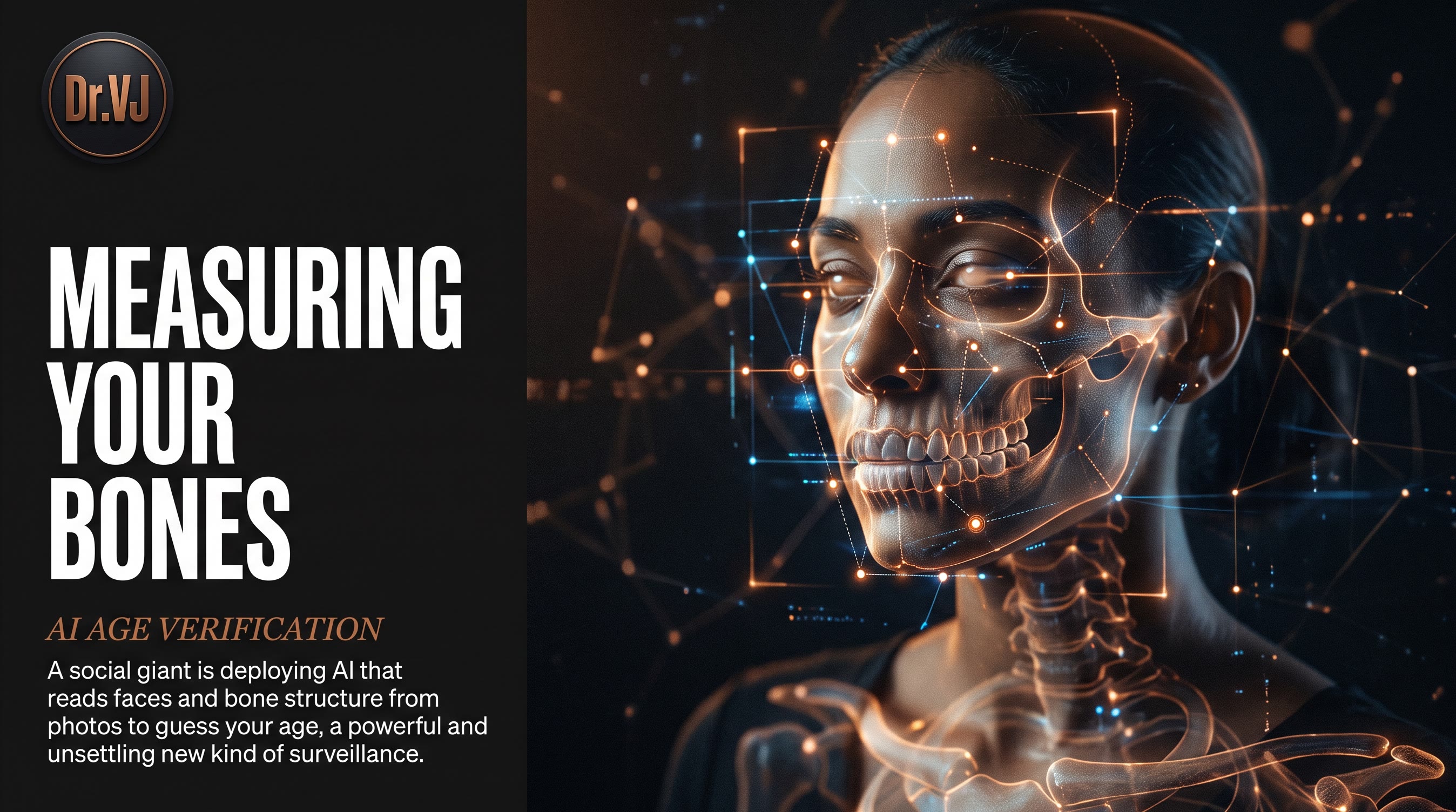
Meta wants your bones.
Not literally — but close enough. The company announced an AI system that scans photos and videos for visual cues to detect if users are under 13. The specific signals it's using: height and bone structure.
What the System Actually Does
Meta calls this "not facial recognition." Instead, the company says it "looks at general themes and visual cues, for example height or bone structure, to estimate someone's general age."
The system combines visual analysis with profile data: birthday mentions, school grades, posts, comments, and bio content. If the AI estimates someone is underage, the account is deactivated until age verification is completed.
Currently operating in select countries. Instagram Live and Facebook Groups expansion is planned. Teen Account restrictions are expanding to 27 EU and Brazil countries, plus Facebook in the U.S. (June: U.K. and EU).
Why Now: The New Mexico Verdict
The timing isn't accidental. A New Mexico jury ordered Meta to pay $375 million for misrepresenting platform safety and exposing children to harm. Meta threatened to shut down services in that state rather than comply.
The bone-structure AI is Meta's response to mounting legal pressure — a technical solution to a legal problem. If the AI can proactively detect underage users before harm occurs, Meta has a defense against future litigation.
The question is whether a detection system is sufficient compliance or just a liability shield.
"Not Facial Recognition" Is Doing Heavy Lifting
Meta is careful to say this isn't facial recognition. Facial recognition identifies specific individuals. This system estimates age from general visual features.
Privacy advocates point out that bone structure analysis is still biometric data — information derived from a person's physical characteristics that can be used to infer identity or characteristics. Whether it technically qualifies as facial recognition under various state and international privacy laws is an open legal question.
The "we don't do facial recognition" framing is technically defensible but practically concerning: the system is analyzing your body to make inferences about you, and that analysis is being performed on billions of photos.
The Privacy Tradeoff
The stated goal — keeping children off platforms where they're exposed to harm — is legitimate. The question is whether this approach is proportionate.
Problems:
- Analyzing bone structure from photos raises questions about what else the AI might infer from images
- The visual data being collected is biometric in nature, even if labeled differently
- Users haven't consented to bone structure analysis of their photos
- The accuracy claims haven't been independently verified
What This Signals for AI Systems
Meta's announcement is a preview of how AI systems will be deployed for safety and compliance purposes — not just to make products better, but to meet legal obligations. The bone-structure AI isn't a feature. It's compliance infrastructure.
For AI builders: the regulatory environment is forcing AI systems into roles they weren't designed for — age verification, identity inference, content analysis. These are hard problems that won't be solved by "it's not facial recognition."
The AI age detection market is going to grow fast as platforms face similar legal pressure. What Meta is doing here will become standard practice — which makes getting it right matters.
Sources: TechCrunch