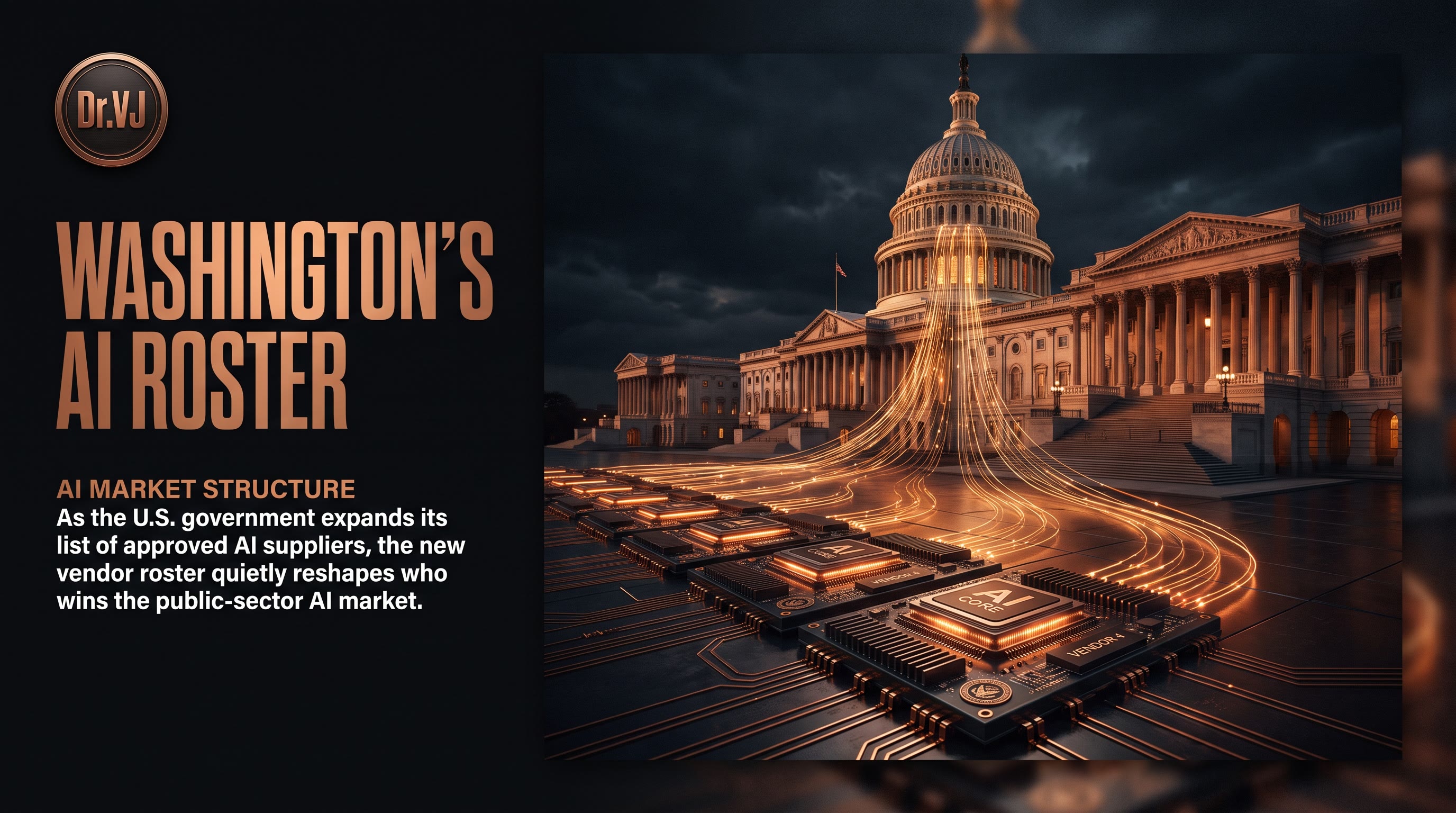
The US government expanded its AI supplier roster while simultaneously reconsidering its relationship with Anthropic. It's a move that sounds like bureaucratic procurement housekeeping but carries significant implications for the AI market structure we're heading into.
Why Government AI Procurement Matters More Than Product Announcements
Government AI contracts get less press than model releases or funding rounds, but they matter more for durable competitive positioning. A product launch captures developer attention for a cycle. A government procurement contract captures a customer for years.
Federal procurement is sticky. Once a vendor is on an approved roster, they're eligible for a wide range of contracts without going through full competitive bidding each time. The relationships, compliance frameworks, security certifications, and contractual terms established in early government AI deals become the template for subsequent deals.
Being on the government AI roster is a signal to the enterprise market: if this vendor meets federal security and compliance standards, enterprise buyers can have confidence in their governance capabilities. Federal procurement has always served as a reference customer for enterprise sales. AI procurement will follow the same pattern.
The Anthropic Relationship Nuance
The nuance in the government reconsidering its Anthropic relationship is important. It's not that the government is moving away from AI — it's that it's broadening the vendor base. More vendors means more competition, more price pressure, and more resilience against single-vendor dependency.
This is the standard government procurement playbook for strategic technologies: don't depend on a single supplier, even a capable one. If Anthropic's models are best-in-class for certain use cases but the government wants to maintain multiple capability options, the rational move is to expand the roster while evaluating where Anthropic fits best.
For Anthropic, this is a complex signal. On one hand, being in the government AI supplier conversation is validation. On the other hand, being "reconsidered" rather than "expanded" suggests friction — either in pricing, compliance, data handling, or the government's desire to avoid over-dependence on any single AI lab regardless of howcapable they are.
What the Expanded Roster Means for AI Labs
For AI labs competing for government contracts, the message is: get your compliance infrastructure in order. Federal AI procurement involves FedRAMP authorization, security certifications, data residency requirements, and audit frameworks that most AI labs haven't built because their primary customers have been consumer and enterprise SaaS.
The government is building a multi-vendor AI procurement framework, not picking a single national champion. That means there's room for multiple AI labs to participate — but only if they meet the bureaucratic requirements that federal procurement imposes.
The labs that invest in government compliance infrastructure early will have a structural advantage as federal AI spending grows. The labs that treat government procurement as secondary will find themselves locked out of a market that's growing faster than commercial AI.
The Broader Market Signal
When the world's largest buyer of technology services (the US federal government) expands its AI vendor roster, it's telling the market something: AI is now a category that requires procurement infrastructure, not just sales relationships.
The implications extend beyond government. Enterprise procurement teams that have been采购 AI on an ad-hoc basis will increasingly adopt frameworks that look like government procurement — security certifications, usage audits, vendor diversification, data handling requirements.
The AI labs that treat procurement compliance as a priority will benefit from this institutionalization. The ones that treat it as an afterthought will find the enterprise market harder to navigate than the consumer market.