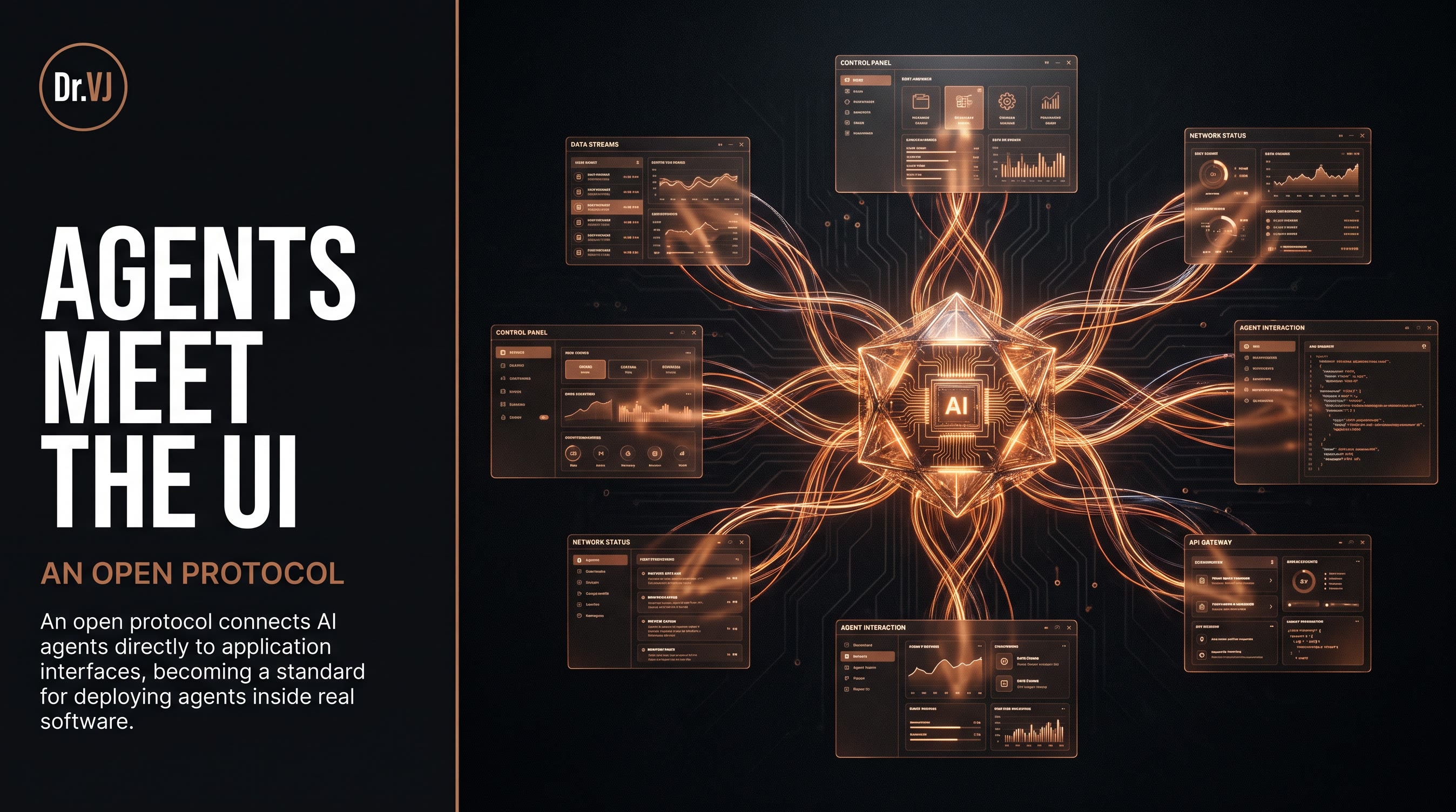
CopilotKit raised $27 million to solve a problem that every enterprise AI project eventually hits: AI works great in a chat window, but it falls apart when you try to put it inside an actual application.
The company's product is the AG-UI protocol — an open standard for connecting AI agents to user interfaces. The pitch: instead of getting a text response, you get an interactive AI that understands your app, acts within it, and shows results in the product itself.
What AG-UI Actually Means
The "AG" in AG-UI stands for "agentic." The protocol lets AI agents:
- Understand what the user is doing in an application
- Take actions within that application context
- Display results as interactive UI components — not text blocks
CEO Atai Barkai's example: "Instead of getting a big, impenetrable paragraph, you get a pie chart." The AI doesn't summarize the data — it operates on the data and renders the result.
This is a fundamentally different UX pattern than chat interfaces. Chat works for exploration. It doesn't work for operational workflows where you need the AI to actually do something in a system.
The Adoption Numbers
Millions of installs per week. That's a significant signal — developers aren't just evaluating CopilotKit, they're shipping it. The enterprise customer list includes Deutsche Telekom, DocuSign, Cisco, and S&P Global — companies that have real requirements for AI agents that operate in regulated environments.
Enterprise adoption of AI agents has been stalled by the same problem CopilotKit is solving: chat interfaces don't fit enterprise workflows. An AI that lives inside a procurement system and can approve or flag invoices is more useful than a chatbot that describes what it might do.
The Competitive Landscape
CopilotKit competes with Vercel's open-source AI SDK, assistant-ui, and OpenAI's Apps SDK. The differentiation is the protocol approach — AG-UI is meant to be framework-agnostic, working across different AI providers and application frameworks.
The CEO's quote on enterprise requirements: "Enterprises want optionality and they want self-hosting." That explains the open-source approach — if enterprises are going to put AI agents into production workflows, they need to own the infrastructure, not depend on a startup that might change direction.
What This Means for AI Builders
The pattern CopilotKit represents — AI agents that live inside applications, with interactive UI components, on enterprise infrastructure — is where AI product development is heading.
Chat interfaces were the first wave of AI products. App-native agents are the second wave. The funding ($27M in Series A) tells you the market believes this transition is real and happening now.
For AI product teams: the question isn't whether to put AI inside your app. It's what the AI actually does when it's there. CopilotKit's bet is that the answer is "a lot more than a paragraph."
Sources: TechCrunch